
Innovex – How REMOT supports solar power for Hello Hubs (Uganda)
Description
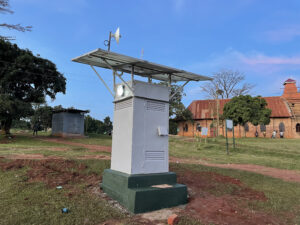
- Type of system: Solar PV and battery storage powering digital access points, integrated with Innovex DAVIX monitoring hardware and the REMOT platform.
- Location and scope: Uganda, including Nakawuka in Wakiso, Kibingo in Hoima, Harugongo in Kabarole and Rubondo Youth Centre in Nakivale. The December 2023–January 2024 equipment register records 53 monitoring devices against Ugandan Hub locations.
- Completion date: Phased deployment, with REMOT use documented in 2023 and equipment procurement and support continuing into 2026.
Company description
Innovex Uganda develops smart hardware and the REMOT platform for monitoring and managing distributed assets. Hello World works with Imagine Her, its operating partner in Uganda, and participating communities to deliver Hello Hubs. The Hub model combines tablets and educational software with Wi-Fi, charging facilities and solar power. Innovex supplies the energy monitoring component; Hello World and its partners organise the community service.
The Challenge
Engineers needed to understand what was happening between site visits. According to Hello World’s engineering team, faults could previously remain unnoticed until a community reported a Hub outage, by which time learning access had already been disrupted. Travelling to a site simply to establish the cause added to the maintenance burden.
The task was to give engineers usable information about solar generation, battery voltage and energy consumption, then connect that information to people who could act locally. A monitoring alert is valuable when it leads to diagnosis, a repair or a targeted visit.
Renewable Solution
Solar PV and battery storage supply power at the point of use. In a 2023 engineering interview, Hello World described a 24 V DC configuration using four 12 V, 100 Ah batteries. Designs vary by site. Innovex’s contribution is remote visibility into the energy system, email alerts and remote switching where installed.
The engineering team described checking REMOT readings and recent trends, then contacting a trained Community Support Officer when performance looked abnormal. For example, unexpectedly low daytime generation could prompt checks of the installation and electrical connections. Local officers could take multimeter readings under remote guidance; more complex faults would require an engineer visit.
“Before REMOT, we were largely blind between site visits. We only learned a hub was down when the community told us, and by then we had often lost days of learning time.” – Basemeza Hillary, Lead Engineer, Project Hello World / Imagine Her
Project Financing and Costs
Hello World’s wider Hub programme combines donor support, local implementation and community participation. Its funders include abrdn, whose support extends to Uganda Hub construction and technical staff. Hello World procures Innovex monitoring equipment as part of the energy system.
Hello World’s published cost guidance puts equipment at around £8,000 and the average completed-Hub cost at £18,000–£20,000. These are programme benchmarks, not the cost of REMOT or the total budget for this partnership. Lifecycle planning also needs to cover connectivity, maintenance, replacement components and technical support.
Project Outcome
Hello World’s engineers report that REMOT supports earlier identification of abnormal energy performance and helps them decide what to check locally and when to dispatch a technician. Their account describes a practical monitoring and response workflow. Its wider value depends on functioning field devices, reliable communications and follow-through on alerts.
Operational experience has also highlighted device and connectivity faults and gaps in reporting. Addressing these issues is part of sustaining dependable remote supervision as the partnership develops.
The community value of the wider Hub programme is supported by a June 2024 study by 60 Decibels: among 278 users interviewed across 20 Uganda Hubs, 91% reported improved quality of life. Benefits included educational resources, savings on internet services and access to information. This describes users’ experience of Hello Hubs; it does not isolate the effect of REMOT.
“The biggest change is trust. When community hosts know their Hub will be on and is being monitored when their children arrive, they start to depend on it, and that reliability is what makes the whole model worth funding.” – Basemeza Hillary, Lead Engineer, Project Hello World / Imagine Her
Lessons for ARE members
- Pair remote monitoring with trained local support and a clear route for escalating faults.
- Maintain the monitoring service itself: field hardware, connectivity and usable reports all need ongoing attention.
- Measure energy performance, internet availability and community use separately to understand service quality and impact.
Next Steps
The immediate priority is to strengthen continuity of monitoring by resolving outstanding connectivity and reporting issues and supporting equipment replacement. A useful next phase is to record alert-to-resolution times, remote resolutions and site visits consistently, creating a stronger evidence base for future deployment decisions.
Operators managing dispersed solar assets are invited to contact Innovex to discuss a REMOT monitoring pilot. Partners interested in supporting Hello Hubs can engage Hello World through its community connectivity programme.