
TRRC – Merlog Foods solar project (South Africa)
Who, What & Where
- TRRC
- Powering South Africa’s cold chain with solar
- Cato Ridge, South Africa
The Company
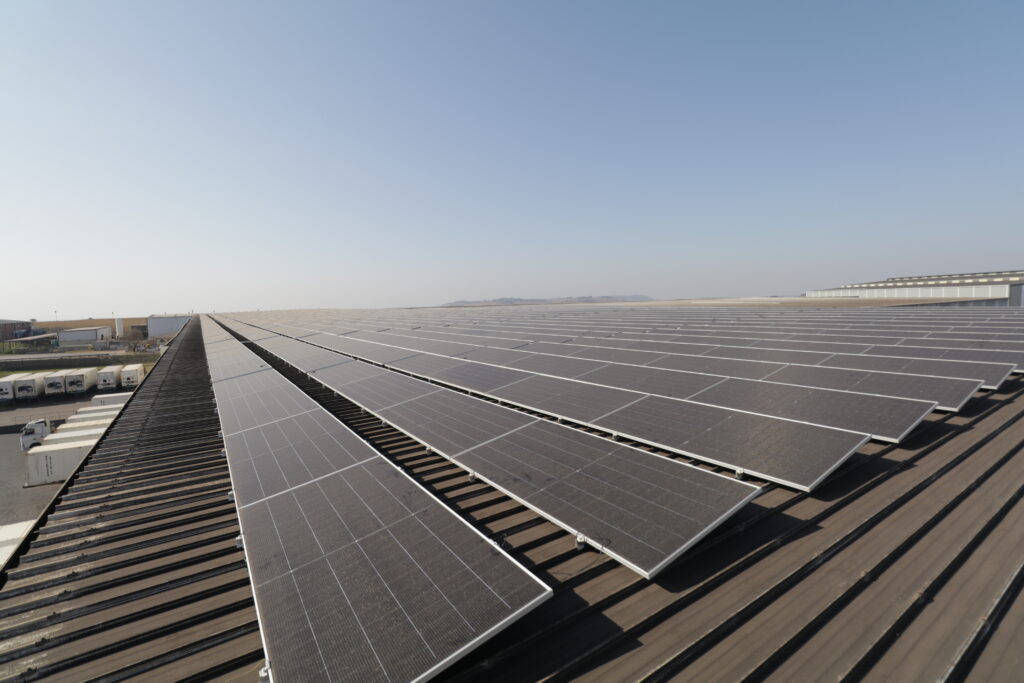
In 2026, TRRC completed the Merlog Foods solar project, an 885.6 kWp rooftop PV installation at the company’s head office and distribution centre in Cato Ridge, KwaZulu-Natal.
Merlog operates in the temperature-controlled food distribution industry, where refrigeration, automated storage, warehousing and logistics create a substantial and continuous electricity demand.
For TRRC, the project was an opportunity to integrate large-scale renewable energy into critical cold-chain infrastructure while keeping the facility fully operational.
The Challenge
Cold-chain facilities are naturally energy intensive.
Before the solar installation, one 30-day electricity billing period recorded approximately 313,691 kWh of grid electricity consumption, with recorded demand reaching around 669 kW.
The challenge was to integrate almost 0.9 MWp of solar into an existing industrial electrical network while working around the facility’s roof structure, transformers, electrical distribution and daily operations.
The installation also needed to operate as a zero-export system, meaning solar generation had to continuously respond to Merlog’s real-time electricity demand without exporting excess power to the grid.
The Solution
TRRC designed and installed an 885.6 kWp rooftop PV system, consisting of:
1,417 Astronergy ASTRO N7 625 W n-type TOPCon modules and five Sungrow SG150CX 150 kW inverters, providing a total AC capacity of 750 kW.
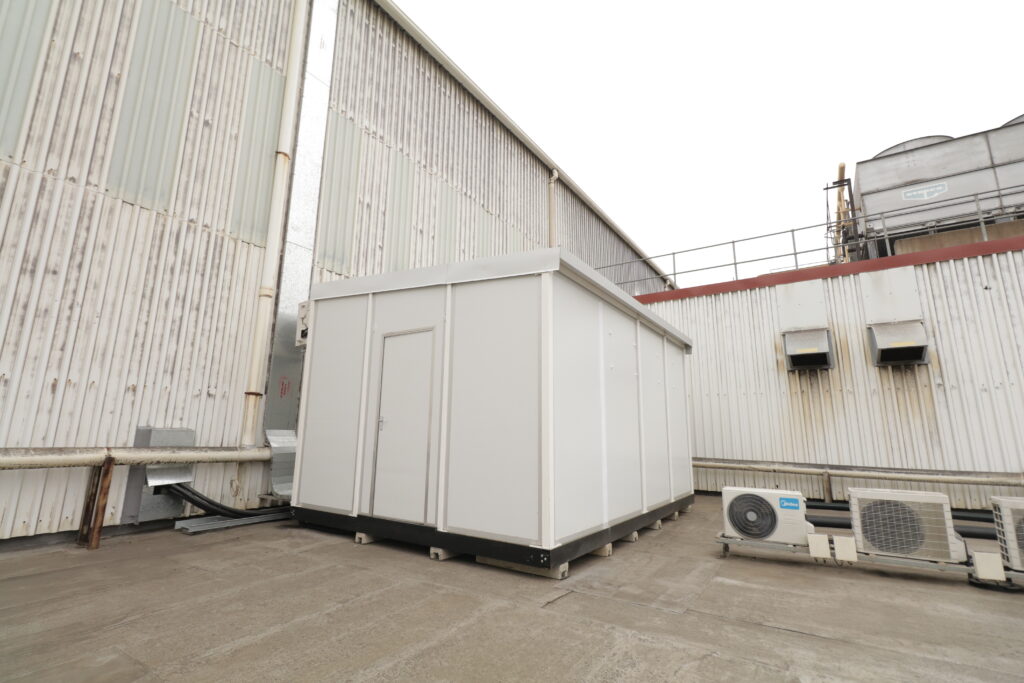
A dedicated rooftop power room houses the inverters, electrical protection, communications and associated solar equipment.
During daylight hours, solar electricity is used directly by the facility. When solar production is lower than demand, the grid automatically supplies the balance. If solar production exceeds the site’s immediate requirement, the system reduces generation rather than exporting electricity.
The Impact
The completed system is modelled to generate approximately 1.44 GWh of renewable electricity per year.
Based on South Africa’s published grid-emissions factor, this level of generation represents the potential to avoid approximately 1,300 tonnes of CO₂e annually, depending on the amount of solar energy consumed on site.
The project demonstrates how commercial solar can support energy-intensive cold-chain infrastructure while reducing daytime grid dependence and carbon emissions.
What’s Next?
TRRC and Merlog are also evaluating a potential future 2.5 MWh battery energy storage system.
Battery storage could further reduce peak-period grid consumption, improve energy flexibility and allow Merlog to make even better use of available energy.
For TRRC, the project is about more than 1,417 solar panels. It shows how renewable energy can become part of the infrastructure keeping Southern Africa’s cold chain moving.