
Be Cool: Solar-powered success for agriculture in Ghana & Kenya
After three years of successful collaboration, the project partners Phaesun GmbH and Solar Cooling Engineering GmbH (SCE) have successfully completed the international development project “BE Cool – Business Empowerment through solar cooling solutions”. The project was aimed to establish sustainable and affordable solar-powered cooling solutions for agricultural value chains in Ghana and Kenya. It was co-financed by DEG Impulse, a subsidiary of DEG – Deutsche Investitions- und Entwicklungsgesellschaft mbH, using funds from the develoPPP programme.
At the heart of the project was the introduction of innovative SelfChill cooling systems specifically designed for rural regions with limited access to electricity. The SelfChill systems operate entirely on photovoltaic energy and use environmentally friendly cooling technologies. By relying on locally sourced materials and avoiding diesel-powered refrigeration, the systems significantly reduce CO₂ emissions while cooling fruits, vegetables and other perishable products, thereby significantly reducing post-harvest losses. In many regions of Sub-Saharan Africa, up to 50 percent of harvested produce is currently lost due to missing cold chains.
During the project period, solar-powered demonstration cold rooms were installed in Ghana and Kenya together with local partners using locally available construction materials wherever possible. A particular highlight of the project was the installation of the very first solar-powered cold room with thermal ice storage in Ghana, located in the agricultural region of Tamale in Northern Ghana. The cold room is now being used for training and demonstration purposes and serves as an important reference site for the region. The cold room in Ghana mainly stores eggplants from food traders.
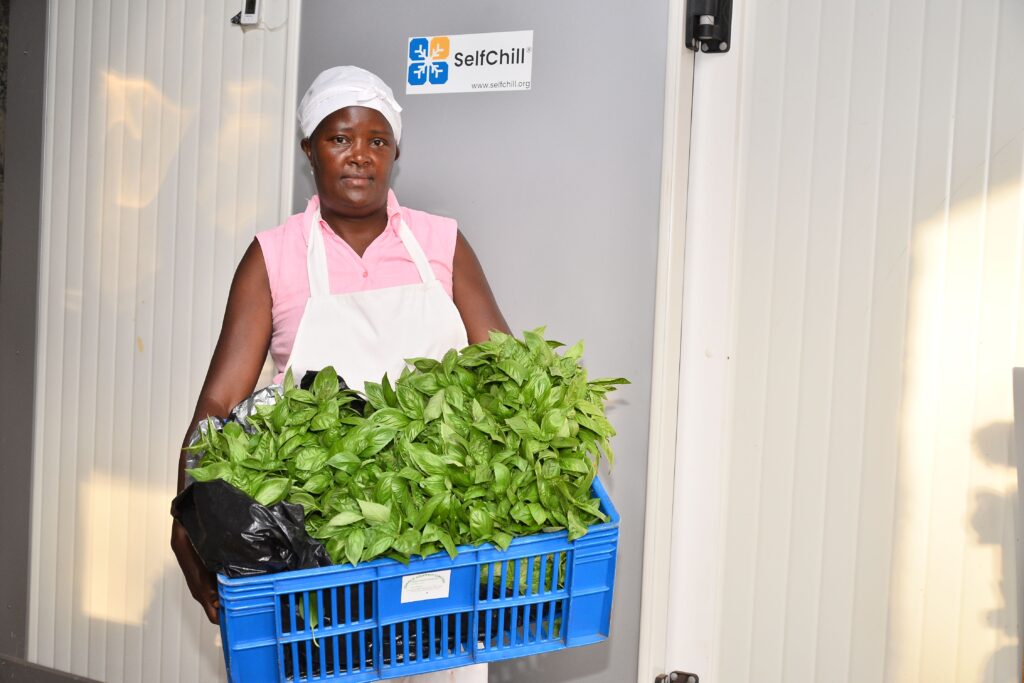
Kenya, on the other hand, is considered one of the most advanced markets for solar cooling systems in Africa. In addition to the technical implementation, the project strongly focused on developing sustainable business models for the long-term operation of the cooling systems. Therefore, the project activities in Kenya focused strongly on documenting and validating the Cooling-as-a-Service (CaaS) business model under real market conditions. Cold rooms located at market hubs are operated centrally and storage space is rented out to market vendors and farmers, who mainly store their green leafy vegetables, onions and tomatoes.
Another major focus of the project was knowledge transfer and capacity building. Numerous technical trainings, installation workshops, conferences and awareness-raising activities were conducted for technicians, solar companies, farmers, financial institutions, NGOs and policy makers. These activities created important foundations for the long-term development of local markets for solar cooling technologies.
“With BE Cool, we demonstrated that solar-powered cooling systems are not only technically reliable but can also become economically viable solutions for rural agricultural communities,” says Géraldine Quelle, Project Manager at Phaesun’s Research & Innovation Team. “A key success factor was the close collaboration with local partners: the investor as well as the local technician and the market women.”
The project also generated valuable insights for the future roll-out of solar cooling solutions across Africa. The validated approaches and business models are intended to support future market expansion in both East and West Africa through Phaesun’s and SCE’s long-standing partner network.
The successful completion of BE Cool marks another important milestone towards sustainable cold chains, climate-friendly agricultural infrastructure and improved food security in Africa.