
Beyond batteries: Why women are essential to a circular energy storage future
The next great energy revolution is already underway. For decades, the clean-energy conversation centred on generation: how much solar we could install, how many wind turbines we could build. Today, as renewables scale, a deeper question is emerging: how do we store energy wisely, use resources responsibly, and ensure that what we build continues to create value for years to come?
We are entering an extraordinary era for energy storage. In 2025, global battery demand surpassed 1.5 terawatt-hours (TWh), growing by more than 35% in a single year. Yet every battery has a story beyond its first use.
What happens when an electric-vehicle battery reaches the end of its first life? Can it be repurposed? Can we design batteries today with their second, third and final lives already in mind?
These questions lie at the heart of circularity, and, perhaps connect with a way of thinking that has long been familiar to women.
Across generations and cultures, women’s traditional knowledge and everyday practices have often focused on careful use of resources, reuse, repair, sharing and reducing waste. Women have historically played an important role in managing household resources, preserving food, reusing materials and passing practical knowledge from one generation to the next.
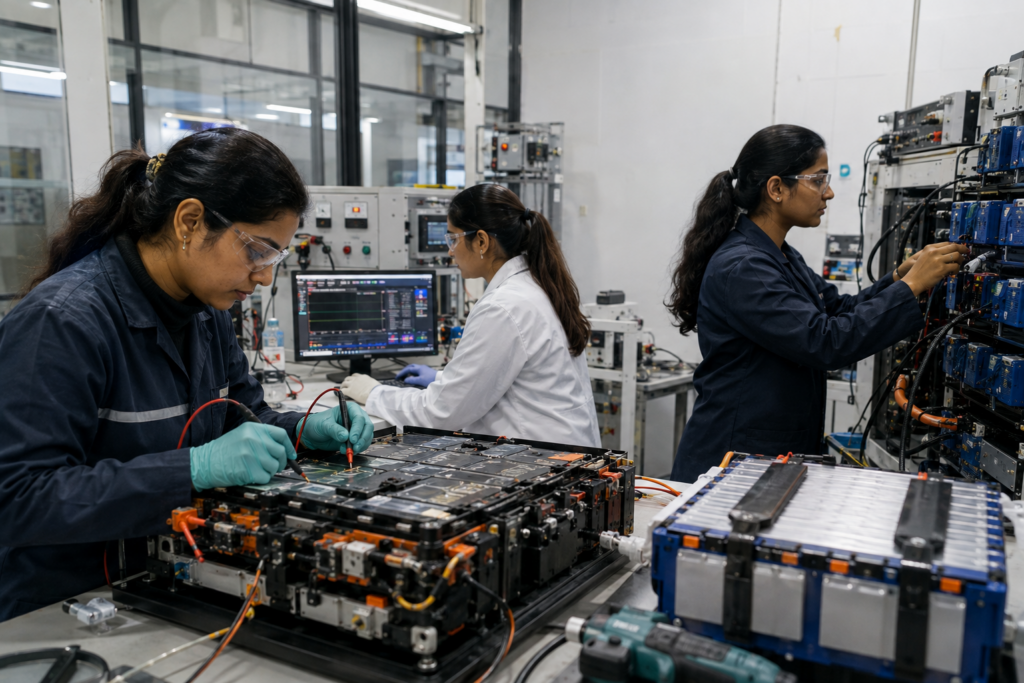
These practices reflect values that are central to the circular economy: resourcefulness, resilience, continuity and long-term thinking. Recognising and strengthening these perspectives can help women become important agents of change in building a more inclusive, resilient and sustainable circular economy.
The momentum is already visible. Women represent 32% of the global renewable-energy workforce. Meanwhile, the circular battery economy is rapidly taking shape. The IEA estimates that around 1.2 million EV batteries could reach the end of their first life by 2030, rising to approximately 14 million by 2040.
This is therefore more than an emerging industrial opportunity. It is an invitation to rethink what we value. It is an opportunity to bring perspectives that resonate deeply with a future built around care, and continuity.
A battery reaching the end of its first life does not have to represent an ending. It can become the beginning of another journey and another cycle of value. That is the spirit of circularity: to look beyond what something is today and imagine what it can become tomorrow.
Women have an important role in bringing that spirit into the energy-storage ecosystem, not because the future belongs to one gender, but because every transformative industry benefits when different experiences, perspectives and ways of thinking come together.
Beyond batteries lies a future built on continuity rather than consumption, possibility rather than disposal. Women can help shape that future, bringing ingenuity, stewardship and a long-term vision to an energy system designed to last.