Build, buy, or build on? Rethinking the software decision for PAYGo founders
When a last-mile energy company outgrows spreadsheets, the next conversation is almost always about software: should we build our own system or buy a platform? We’ve had that conversation with more than 150 distributors over the past decade. The answer is rarely as simple as either side makes it sound.
Building in-house gives you control over workflows and data. AI coding tools have made a first version faster and cheaper to build, but writing code was never the hard part. Contract logic, payment reconciliation and inventory tracking take years of field use to get right, and the knowledge often sits with a few developers. Custom systems are also hard for investors to audit, especially when they’re built on AI-generated code that no one on the team fully understands.
Buying a SaaS platform gets you live faster, with sector practices built in. The trade-off is a recurring licence fee that grows as you scale, a shared roadmap where your specific needs compete with those of every other client, and data hosted outside your organisation. For NGOs and public programmes with data-sovereignty rules, that can rule it out.
There is now a third route: start from an open-source platform and build on it.
With support from the Global Energy Alliance for People and Planet, on 27 October, at the Global Off -Grid Solar Forum in Kigali, Masunga launched PaygOps Community Edition as free, open-source software on GitHub. It covers more than 80% of the features our clients use day to day. That includes leads and custom KYC forms; cash, credit, subscription and usage-based contracts; payment reconciliation; inventory; off taking; basic OpenPAYGO Token integration; and API access. You run it on your own infrastructure and keep your own data, with no licence fee.
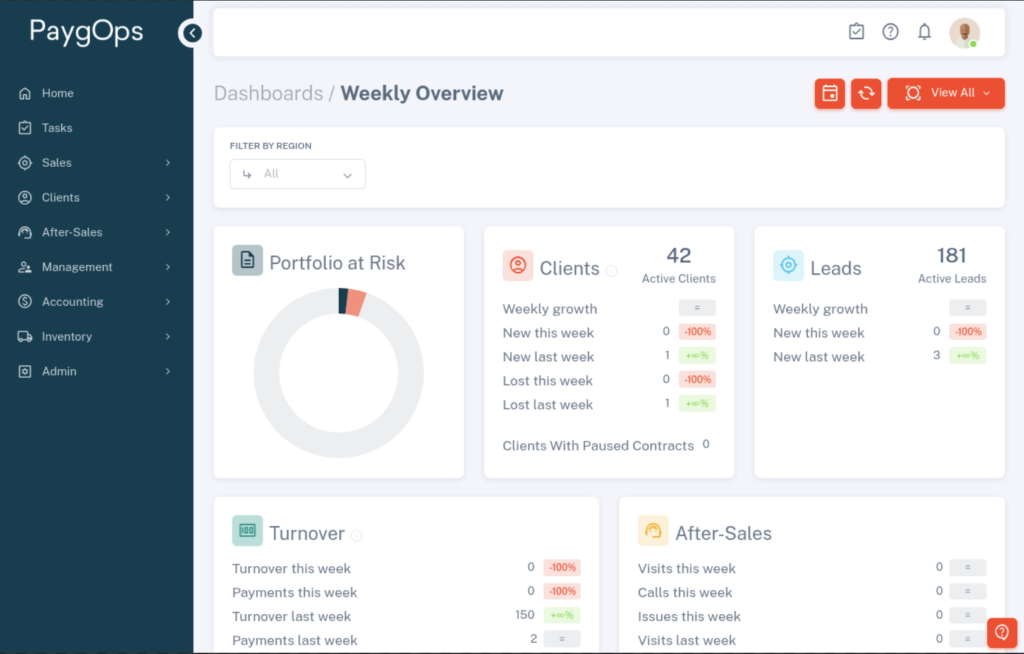
Because the code is open, your team can adapt it to your model, connect it to your own ecosystem of payment providers, devices and tools, and contribute improvements back. Fixes and new features to the core continue to be released, so you are not maintaining a fork on your own.
Building from scratch makes sense when your model is genuinely unique and the software is your competitive edge. A fully managed platform suits teams that are scaling fast and need fi eld apps, automation and dedicated support. Community Edition fits organisations that want ownership without rebuilding the basics, from NGOs running asset-fi nance programmes to established distributors.
It doesn’t lock you in either. You can add paid services or move to PaygOps Premium as your needs grow.
To see it in action, join our session at ARE’s I4E webinar on 29 October at 14:00 CET or our launch webinar on 26 November, try the public test instance, or find the code.