

SAO Energy – Deployment of hybrid digital health information system in Ondo State (Nigeria)
Description
- Type of system: Solar-powered Hybrid Digital Health Information System (HyDHIS) using the Healthcare Facility Electrification (HFE+) model.
- Location of project: 50 Primary Healthcare Centres (PHCs) across Akure North, Akoko North-East and Owo Local Government Areas, Ondo State, Nigeria
- Completion date: September 2026
The Company
SAO Energy Services Africa Ltd was founded in 2017 as a portfolio company of SAO Group, a social impact investment and advisory firm. This was due to the pressing need for electricity in the Nigerian Health sector as we realised 95% of the 34,000 primary healthcare centres (PHCs) serving over 191 million Nigerians are without adequate and reliable power supply.
SAO Energy provides low cost renewable energy solutions to underserved communities across Nigeria in the bid to reduce energy poverty in rural Africa. Our solutions are tailor-made for each community we identify, we do this to improve healthcare delivery, power households and small businesses to bridge energy and improve livelihoods.
The Challenge
Upon depoying solar systems across primary health centres we continue to task ourselves with ensuring that they are value generating assets. During follow-up visits and discussions on how to improve economic opprtunites within and outside the facility, we discovered that the centers still relied on analogue ways of data management. Fragmented patient files, administrative burden, and limited digital capacity made it difficult to maintain accurate, complete data and to report reliably to state and national health authorities thereby, constraining evidence-based planning and service delivery. This affected the patient turnaround time, adoption of technology and patient referral system.
Renewable Solution
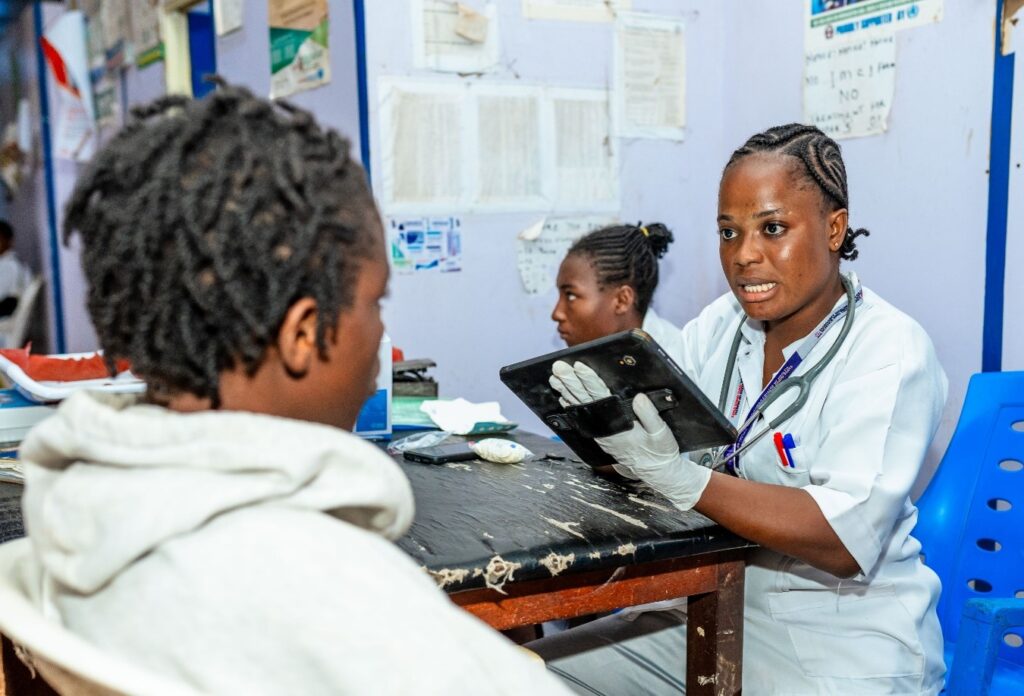
The DHIS project is part of a broader Healthcare Facility Electrification (HFE+) model, which integrates digital health information systems (DHIS) into already solarised PHCs.
Project Description
The Hybrid Digital Health Information System is a scalable, data-driven innovation that has transformed electrified facilities into digitally enabled health service delivery points across 50 PHCs in Ondo State, Nigeria. Its modular components – digital starter kits, offline-first DHIS2-linked applications, standardised training, data quality systems, and Digital Steward support – enable low-cost expansion to additional PHCs, particularly those already electrified.
The solution combines offline-first and online capabilities, enabling healthcare workers to capture and access patient and service delivery data without internet connectivity while automatically synchronising with a secure cloud-based platform once connectivity is restored.
This innovative project moves beyond just the electrification of primary health care centres to supporting the effectiveness and efficiency of these centres through the integration of the Healthcare Facility Electrification (HFE+) model, by linking energy access with digital enablement to enhance local data quality, build local human capacity, and institutionalise data-driven decision-making practices within the primary healthcare system.
Each PHC is supported by 1 rugged tablet running a fully customised electronic medical record. The tablet assists clinicians in health centres in reducing administrative burden and improving service-delivery workflows, while also enabling more reliable reporting from facilities.
The Outdoor Rugged Tablet
The T1 Max outdoor rugged tablet is a fully customised field device built specifically for the realities of primary healthcare in rural Nigeria. It is engineered to continue working despite dust, heat, and humidity, ensuring that health information continues to flow even in challenging environments.
- The tablet’s high-performance hardware enables smooth operation of digital health applications, improving efficiency during patient consultations and reporting.
- It provides ample space for patient records, offline data, training resources, and essential applications without compromising performance.
- The operating system delivers enhanced security, improved privacy, and compatibility with modern digital health applications.
- It supports efficient patient identification, inventory management, and asset tracking.
- The long-lasting lithium-ion battery provides up to two to three weeks of operation on a single charge, enabling continuous service delivery in communities with limited or unreliable access to electricity.
- The rugged design and optimised performance reduce device downtime and maintenance needs, supporting uninterrupted digital healthcare services in remote and underserved communities.
- The integrated data capture capabilities support faster, more accurate documentation while reducing dependence on paper-based processes.
The HealthDocx Application
The Healthdocx application is a third-party platform that solves the challenges of fragmented records, such as the digitisation of existing files or new records for patients. It handles the health centres’ workflows and digital forms covering maternal and child health, immunisation, Outpatient Department (OPD), laboratory requests, pharmacy dispensary, and disease surveillance modules.
- The HealthDoc application supports offline documentation, enabling healthcare workers to capture and securely store patient records without internet connectivity and synchronise data once connectivity is restored.
- The application supports the digitisation of both existing and newly created patient records, enabling healthcare facilities to transition seamlessly from paper to electronic health records.
- The platform was customised to align with the project’s objectives and the workflows of primary healthcare clinicians, ensuring a user experience tailored to frontline service delivery.
- The customised workspace enables healthcare workers to capture, retrieve, and update patient information efficiently, improving continuity of care and clinical decision-making.
- The application streamlines health record management by reducing duplication, improving data accuracy, and ensuring patient information is readily accessible when needed.
- The digital platform enhances data availability for reporting and health information management, supporting evidence-based planning and improved healthcare outcomes.
- The configurable platform allows workflows and functionalities to be adapted to the evolving needs of healthcare providers and future digital health initiatives.
The Global DHIS Platform
The Global DHIS2 platform aggregates health service data from Primary Healthcare Centres into a centralised health information system for reporting and analysis.
- The platform enables the timely submission of routine health reports, improving the availability, completeness, and accuracy of health information.
- The platform provides health managers and government stakeholders with reliable data to monitor health indicators, measure facility performance, and identify service delivery gaps.
- The platform supports evidence-based planning, resource allocation, and policy development through standardised digital reporting.
- The platform strengthens coordination across the health system by enabling seamless data flow between Primary Healthcare Centres and local, state, and national health authorities.
Together, the rugged tablet, the HealthDocx application and the Global DHIS platform form a single connected chain – from data capture at the point of care, through offline-first storage on the device, to synchronised reporting at state and national level – all sustained by the facility’s solar power supply.
Project Financing and Costs
The project was funded by UK aid through Transforming Energy Access (TEA), with Sustainable Energy for All (SEforALL), hosted by UNOPS, serving as fund manager.
Project Outcome
The Hybrid DHIS is now live across 50 PHCs in Ondo State, each equipped with a solar-powered rugged tablet running the HealthDocx application.
Beneficiary Facilities
The 50 beneficiary Primary Healthcare Centres (PHCs) are spread across three Local Government Areas:
| Akure North LGA (24) | Akoko North-East LGA (17) | Owo LGA (9) |
| PHC Oke Ofa | BHC Okoja | BHC Uso 2 |
| PHC Igoba | BHC Okeruwa | PHC Isiapen |
| PHC Oba Ile | BHC Okela | PHC Oke Mapo |
| BHC Shasha | BHC Iku | PHC Ilale Keji |
| BHC Ayetoro | BHC Alapata | BHC Ijebu 1 |
| PHC Moferere | BHC Ilepa Iso Onisu | BHC Ipele |
| PHC Isinigbo | BHC Jubilee | BHC Osabiya |
| PHC Osi | BHC Ugbe | BHC Emure II |
| PHC Ayede Ogbese | BHC Ipori | BHC Isuada |
| PHC Oba Palace | BHC Cathedral | |
| PHC Imafon | BHC Okegbe | |
| BHC Akomowa | BHC Oyinmo | |
| BHC Ugele | BHC Imole Auga | |
| BHC Ehinala Ilado | BHC Ise | |
| BHC Onipaanu | BHC Otaloke | |
| BHC Alayere | BHC Iboropa | |
| BHC Orojuda | BHC Auga Igbagbo | |
| BHC Isimija Abebi | ||
| BHC Oke Iju | ||
| BHC Abusoro | ||
| BHC Ilu Abo | ||
| BHC Araromi Owode | ||
| BHC Ala Ajagbusi | ||
| PHC Ipinsa |
Capacity Building, Orientation and Training
Training Session for Clinicians Across 50 PHCs
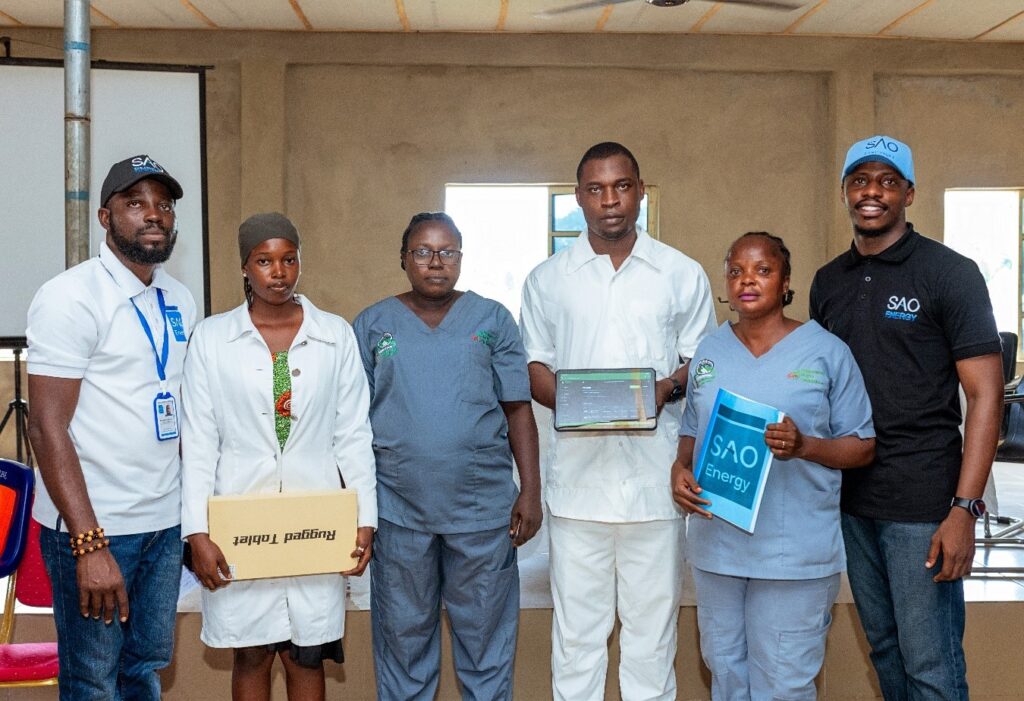
A preliminary on-site training session was held at every facility at the point of deployment. These sessions provided frontline health workers and Officers-in-Charge with hands-on introductory training on the Healthdocx platform. The preliminary sessions served as the foundation for the structured formal training programme held later.
The structured formal training was held at 3 Local Governments, for 200 clinicians selected from the 50 PHCs. During the training, the health workers were shown how to navigate the tablets and the HealthDoc application. Training focused on:
- Creating and manipulating patient profiles.
- Making edits to existing patient profiles.
- Accessing and utilising templates from the template library.
- Storing relevant test and clinical data within patient records.
- Foundational system functions such as workspace access, patient directory navigation, inbox management, and device configuration.
State Ministry of Health Orientation
Two orientation sessions were held for staff and stakeholders from the Ondo State Ministry of Health (SMoH). The first session served as a formal introduction to the DHIS project, a detailed demonstration of the Digital workspace (Healthdocx) platform and its configured workflows, and the project implementation roadmap, with about 20 persons in attendance.
The second session focused on a detailed demonstration of the Workspace platform, a presentation of the phased deployment workplan, and a briefing on the rollout schedule across the three Local Government Areas.
Next Steps
Continued Digital Steward support, expansion of the model to additional already-electrified PHCs, and ongoing data quality monitoring.