
Scaling second-life batteries: What it takes to build a circular energy storage industry
A circular energy storage industry is built on a simple principle: batteries should remain productive for as long as possible, while the materials inside them remain in circulation rather than becoming waste.
That starts long before a battery reaches its second life. First-life systems should be designed for repair, component replacement, diagnosis and eventual disassembly, with operating and maintenance data retained throughout their use. For decentralised renewable energy developers, circularity can therefore begin at procurement: decisions on design, data access, maintenance records, take-back arrangements and supplier responsibility shape what can happen to an asset years later.
Repurposing should then be treated as a value-retention and energy-access strategy, not simply a waste-management intervention. Where a battery remains safe and technically viable, recycling it immediately can destroy useful functional value too early. In markets where reliable energy storage remains expensive and access to dependable power is still constrained, that remaining capacity can support productive-use energy, mini-grids and decentralised systems at potentially lower cost. Recycling remains essential, however. Chemistry, state of health, safety and residual material value will determine the appropriate pathway, and every battery eventually reaches true end of life.
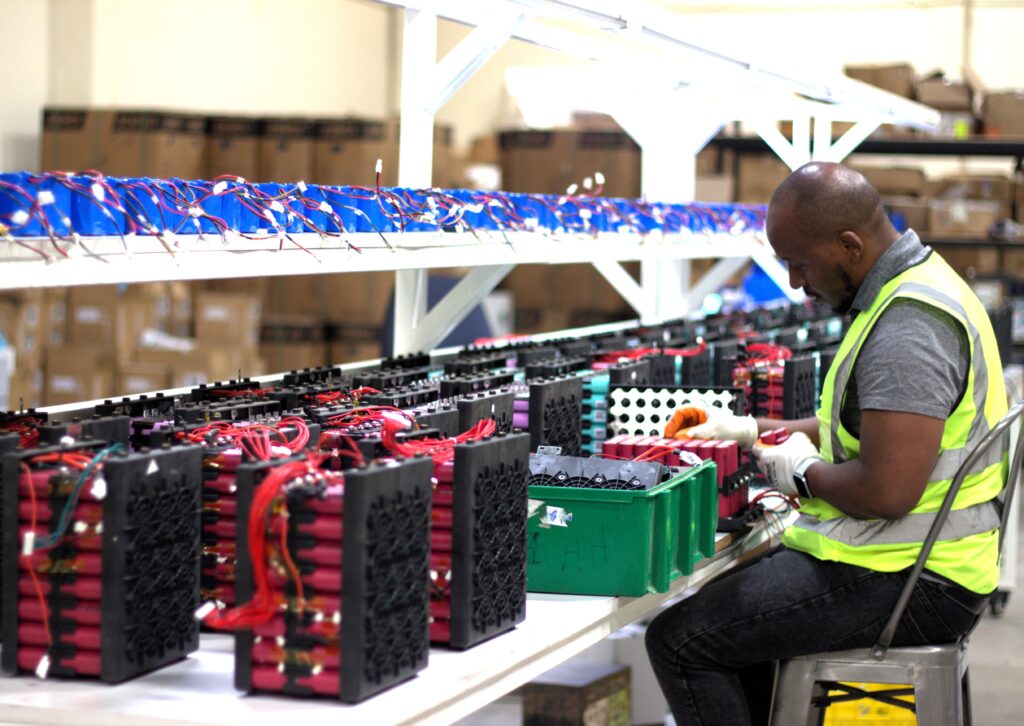
The harder task is building the infrastructure to support those choices. According to the Global E-waste Monitor 2024, Africa recorded the world’s lowest documented formal e-waste collection and recycling rate in 2022, at just 0.7%. When batteries disappear into unmanaged channels, usable storage capacity and recoverable materials are lost, alongside opportunities for businesses and jobs in collection, logistics, diagnostics, repair, repurposing and recycling.
As battery streams diversify, infrastructure must keep pace. Different chemistries and pack designs require different approaches to testing, handling and processing. Africa needs reliable reverse logistics, adaptable testing and grading laboratories, repair and repurposing facilities, recycling capacity, traceability systems and technicians trained across battery technologies. Without these capabilities, usable batteries may be recycled prematurely, while batteries that should be recycled may remain in circulation too long.
Financing this transition will require equally deliberate action. IFC’s Circular Economy Investment Tracker found that Africa received only 0.2% of the private circular-economy investment it tracked across electronics and appliances, packaging and textiles between 2018 and 2024. Development finance can play a catalytic role by de-risking infrastructure and early operating models, enabling businesses to build the predictable feedstock, performance data and cash flows needed to attract commercial capital.
Policy can help create that market. The EU Battery Regulation introduces battery passports for specified battery categories from 2027 and establishes lifecycle information requirements relevant to repurposing, remanufacturing and recycling. India’s 2022 Battery Waste Management Rules take a different approach, explicitly recognising refurbishment and recycling within Extended Producer Responsibility. African markets need not copy either system wholesale, but should adopt the underlying principles: traceability, clear recovery responsibility and credible standards for safe second-life use.
The real test is not whether a battery can have a second life. We already know that many can. The real test is whether we can build the market around them: one that knows where batteries are, understands their condition, has the infrastructure to repair or repurpose them, and can recover their materials when their useful life is over. That is what will determine whether second-life batteries remain a promising idea or become a scalable circular energy storage industry.